
AC Running but Not Cooling? 10 Common Causes in Dubai
Is your AC running but still not cooling the room? You may feel air coming from the vents while the room stays warm because dirty filters, blocked airflow, low refrigerant, frozen coils, fan faults, or electrical problems can affect the cooling cycle. Check simple issues such as the thermostat, filter, and airflow first, but if the problem continues, professional AC repair can help identify the actual fault and restore proper cooling. This article explains common reasons an air conditioner keeps running without cooling, the simple checks you can safely perform, and the warning signs that mean you may need professional inspection.
Why Is Your AC Running but Not Cooling?
Your AC can keep running while the room stays warm when a fault affects its cooling cycle. Dirty filters, restricted airflow, low refrigerant, frozen coils, faulty fans, electrical issues, or compressor problems can reduce cooling performance even when the system appears to operate normally.
01
The Thermostat or Remote Is Set Incorrectly
Is the AC running but the room still feels warm? The remote or thermostat may be set to fan, dry, or automatic mode instead of cooling. A timer, sleep setting, incorrect temperature, or weak remote batteries can also stop the system from cooling as expected.
Start by selecting cooling mode and setting the temperature below the current room temperature. Check that no timer or energy-saving setting is active, replace the remote batteries if needed, and restart the unit. If it still blows warm air, the thermostat or another component may need inspection.
02
The Air Filters Are Clogged With Dust
Does the AC produce weak airflow while running for long periods? Dust-covered filters can restrict the amount of air entering the indoor unit. This reduces airflow across the cooling coil and can make the room stay warm even when the AC keeps operating.
Remove the accessible filters and check for heavy dust buildup. Clean or replace them according to the manufacturer’s instructions. If airflow remains weak after cleaning, a dirty coil, blower problem, or deeper airflow restriction may need professional attention.
03
Furniture or Curtains Are Blocking Airflow
Does cold air come from the AC, but the room still does not cool evenly? Furniture, curtains, storage items, or other objects may block the indoor unit or supply vents. Restricted airflow prevents cooled air from spreading properly throughout the room.
Clear objects away from the indoor unit and keep supply vents open. Check the airflow again after making these changes. If the airflow remains weak, the blower, cooling coil, or ductwork could have a problem that requires further inspection.
04
The Indoor Cooling Coil Is Dirty
Is your AC running longer than usual while producing less cooling? Dust and grime can collect on the evaporator coil, especially when filters stay dirty or the unit does not receive regular cleaning. The buildup reduces heat transfer and can also contribute to ice formation.
A light filter cleaning will not remove heavy dirt from the coil. Avoid scrubbing the coil with household cleaners because you could damage its delicate surface. Arrange professional AC cleaning when the coil has significant buildup or the cooling remains weak.
05
The Outdoor Unit Cannot Release Heat Properly
Does your AC work harder during hot weather but struggle to cool the room? The outdoor condenser may have accumulated dust, sand, or debris, or the surrounding area may restrict airflow. These conditions prevent the outdoor unit from releasing heat effectively.
Check the outdoor unit from a safe distance and remove loose objects that block airflow around it. Do not open electrical panels or touch internal parts. If the condenser coil has heavy dirt buildup, arrange professional cleaning to restore proper heat release.
06
The Refrigerant Level Is Low
Does the AC blow lukewarm air, run for long periods, or develop ice around the copper pipes? Low refrigerant can cause these symptoms and often indicates a leak in the sealed cooling circuit. Hissing sounds and gradually weaker cooling can also point toward refrigerant loss.
Do not treat the problem by simply adding refrigerant. A technician should check the system for leakage, repair the affected area, and then charge the AC with the correct refrigerant according to its specifications.
07
Ice Has Formed on the Evaporator Coil
Have you noticed frost or ice around the indoor unit or copper pipes while the AC struggles to cool? A frozen evaporator coil cannot absorb heat properly and can restrict airflow. Clogged filters, low refrigerant, and indoor fan problems can all cause the coil to freeze.
Switch off the cooling function and allow the ice to melt naturally. Do not scrape or break the ice because this can damage the coil. If the coil freezes again after thawing and filter cleaning, arrange a professional inspection to find the underlying cause.
08
The Indoor or Outdoor Fan Is Faulty
Is the AC running but producing very weak airflow or unusual sounds? A faulty indoor fan can reduce air circulation, while an outdoor fan problem can prevent the condenser from releasing heat. Humming, rattling, grinding, or buzzing can indicate a motor, capacitor, wiring, or control problem.
Check the airflow without opening the unit or touching its electrical parts. If the indoor airflow remains weak or the outdoor fan does not operate normally, a technician should test the motor, capacitor, wiring, and related components before recommending a repair.
09
Cooled Air Is Escaping Through Damaged Ductwork
Does one room stay warmer than others even though the AC appears to work normally? Loose connections, damaged ducts, gaps, or poor insulation can allow cooled air to escape before it reaches the intended room. You may also notice weak airflow or whistling sounds near ceiling areas.
Check accessible vents and make sure they remain open and unobstructed. Since much of the ductwork sits above ceilings or inside walls, a technician may need to inspect the accessible duct sections, connections, insulation, and airflow to locate the problem.
10
The Compressor or an Electrical Component Has Failed
Is the indoor fan running while the AC produces little or no cold air? A compressor problem can stop refrigerant circulation, but a faulty capacitor, sensor, PCB, contactor, or wiring connection can create similar symptoms. Loud humming, repeated clicking, breaker trips, or an inactive outdoor unit can provide additional clues.
Do not repeatedly restart the system if it trips the breaker or makes unusual electrical sounds. A technician should test the compressor and electrical components to identify the actual fault. Proper diagnosis helps prevent unnecessary replacement of expensive parts.
AC Not Cooling? Get Help Before It Gets Worse
Poor cooling can point to blocked airflow, refrigerant issues, dirty filters, or other AC faults. Get the problem checked before it affects your system further.
Why Cooling Problems Are Common in Dubai
Your AC works harder in Dubai because it often runs for long hours to keep indoor spaces cool. Hot outdoor temperatures make heat removal more difficult, while dust and sand can build up on filters, coils, and outdoor units. Poor insulation, large windows, frequently opened doors, and an incorrectly sized AC can also make cooling less effective.
Even when the main components work normally, the AC may struggle if the room gains heat faster than the system can remove it. Regular AC filter cleaning, proper AC airflow, and timely AC maintenance can help keep AC cooling performance steady and identify problems before they become more serious.
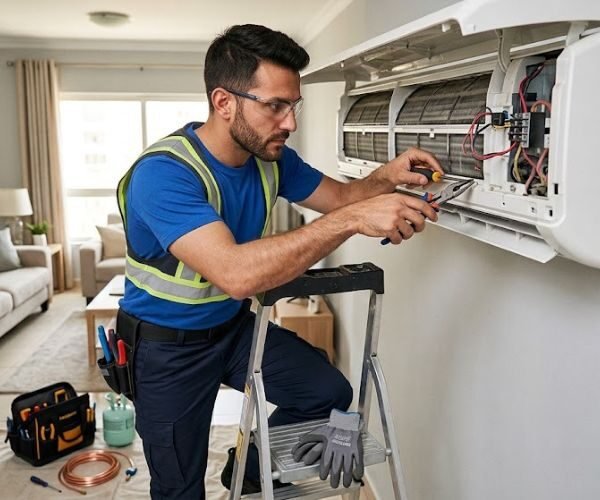
What Can You Check Safely Before Calling a Technician?
Before calling a technician, you can check a few basic things that may explain why your AC is not cooling. Check the cooling mode, thermostat setting, air filters, airflow, and surrounding area for visible obstructions. You can also look for ice or water leaks and listen for unusual sounds. Avoid opening the AC or touching electrical and internal components.
After completing these checks, give the AC some time to cool the room. If the air still feels warm or the same problem keeps coming back, the issue may require professional diagnosis and repair.
Conclusion:
An AC that runs but does not cool properly can result from something as simple as a clogged filter or blocked airflow, but problems such as low refrigerant, frozen coils, fan faults, electrical issues, and compressor failure may need professional attention. If basic checks do not solve the issue, AC repair in Dubai can help identify the actual cause and restore proper cooling.
If your AC continues to blow warm air or struggles to reach the selected temperature, Dubai Fixes provides AC repair services for common cooling, airflow, refrigerant, electrical, and mechanical problems. Getting the issue checked early can help prevent further damage and unnecessary energy use.
AC Not Cooling? Get Your Cooling Back on Track
Weak or warm airflow can signal a cooling, airflow, or refrigerant problem. Get your AC checked early before the issue leads to a bigger repair.