
Why Are Your Lights Flickering Even After Changing the Bulb?
Changing a bulb usually fixes flickering when the bulb itself causes the problem. If the new bulb still flickers, the issue may involve a loose connection, faulty switch, unstable voltage, damaged wiring, or a problem with the light fixture.
You should not ignore persistent flickering because it can point to an electrical fault. A qualified electrician in Dubai can inspect the light, wiring, switch, connections, and electrical supply to identify the actual cause.
Why Are Your Lights Still Flickering?
A new bulb does not always solve flickering because the bulb may not be responsible. Several electrical components work together to power your light, and a fault in any of them can cause unstable operation.
01
A Loose Electrical Connection
A loose wire or terminal can interrupt the electrical flow and make the light flicker. Connections inside the fixture, switch, or electrical box may need professional inspection and tightening.
02
A Faulty Light Switch
A worn or damaged switch can create an inconsistent electrical connection. If the light flickers when you touch, move, or operate the switch, the switch may need inspection or replacement.
03
Damaged Wiring
Old, damaged, or deteriorated wiring can cause unstable power to the light. Wiring problems can also create overheating risks, so you should arrange professional inspection when flickering continues.
04
An Unstable Power Supply
Voltage fluctuations can make lights flicker even after you install a new bulb. If several lights flicker at the same time, the problem may involve the electrical supply rather than one fixture.
05
A Faulty Light Fixture
The fixture itself may have a damaged socket, loose terminal, worn component, or internal connection problem. A professional can inspect the fixture to determine if it needs repair or replacement.
06
LED Compatibility Problems
Some LED bulbs can flicker when paired with incompatible dimmer switches or unsuitable electrical components. Checking the bulb’s compatibility with the fixture and control system can help identify this type of issue.
07
A Faulty Dimmer Switch
Older or incompatible dimmers may not work correctly with modern LED bulbs. Flickering can occur when the dimmer cannot regulate the bulb properly, especially at lower brightness settings.
08
Overloaded Electrical Circuit
If a circuit carries too much electrical demand, voltage instability can affect connected lights. High-power appliances operating on the same circuit may contribute to flickering in some situations.
What Does Flickering Tell You About Your Electrical System?
The pattern of flickering can provide useful clues about the source of the problem. Notice when the flickering happens, which lights are affected, and whether other electrical devices behave differently.
Flickering Happens Randomly
Random flickering can have several causes, including loose connections, voltage fluctuations, wiring faults, or fixture problems. Tracking when it happens can help an electrician narrow down the possible source.
Several Lights Flicker Together
Several flickering lights may indicate a wider electrical issue, such as voltage fluctuations, a circuit problem, or an electrical connection affecting multiple fixtures. This situation deserves professional attention.
Lights Flicker When Appliances Start
If lights flicker whenever an air conditioner, refrigerator, washing machine, or other high-power appliance starts, the circuit may experience a temporary voltage change or another electrical issue.
Only One Light Flickers
When one light flickers while other lights remain stable, the problem may involve that fixture, switch, bulb connection, or local wiring. Professional inspection can identify the specific fault.
Lights Flickering? Book an Electrical Inspection
Flickering lights can point to loose connections, overloaded circuits, faulty switches, or wiring problems. Get the electrical issue inspected before it becomes more serious.
Can Loose Wiring Make Lights Flicker?
Yes, loose wiring can interrupt the electrical connection and cause intermittent flickering. A loose terminal may also generate heat, so persistent flickering should not become something you simply work around.
Loose Fixture Connections
Connections inside a light fixture can loosen because of installation issues, vibration, heat cycles, or age. A technician can inspect the fixture and secure suitable connections as part of the repair.
Loose Switch Connections
A loose wire behind a wall switch can create an unstable electrical connection. Do not remove the switch plate to investigate live wiring yourself because electrical components can remain energized.
Loose Electrical Box Connections
Connections inside an electrical box can become loose over time or after previous work. Professional inspection can help identify damaged terminals, loose conductors, or other wiring concerns.
Loose Panel Connections
A loose connection inside the electrical panel can affect circuits and create flickering or other electrical symptoms. Panel work requires appropriate training and should only be handled by a qualified professional.
Can a Dimmer Cause LED Lights to Flicker?
Yes, an incompatible dimmer can cause LED bulbs to flicker, pulse, or behave inconsistently. This commonly happens when the dimmer does not work correctly with the type of LED bulb installed.
Old Dimmers May Not Suit LEDs
Some older dimmer switches were designed for traditional bulbs and may not regulate modern LED lamps correctly. Replacing the dimmer with a compatible model can resolve the issue.
Low Brightness Can Trigger Flickering
Certain LED and dimmer combinations become unstable at very low brightness settings. Increasing the brightness may temporarily change the flickering, but compatibility should still be checked.
Bulb Specifications Matter
LED bulbs have specific dimming requirements and electrical characteristics. Check the manufacturer’s compatibility information and ask a qualified technician if the bulb and dimmer work together correctly.
The Dimmer May Need Replacement
If the dimmer causes repeated flickering despite using compatible bulbs, the device itself may have developed a fault. Professional inspection can determine if replacement is appropriate.
How Dubai Fixes Can Help With Flickering Lights
Our team can inspect your flickering lights when changing the bulb does not solve the problem. The electrician can check the fixture, switch, wiring, circuit, connections, and other electrical components involved.
If the issue comes from a loose connection, faulty switch, damaged wiring, incompatible dimmer, or circuit problem, the technician can explain the cause and recommend the appropriate repair.
We can also assess wider electrical symptoms when several lights flicker together. Identifying the actual source helps you avoid repeatedly replacing bulbs when the problem lies elsewhere in the electrical system.
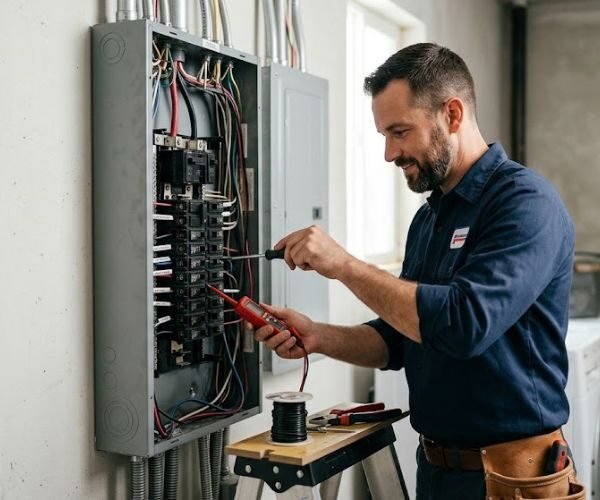
What Other Electrical Problems Can Cause Flickering?
Flickering can sometimes point to problems beyond the light fixture. Wiring issues, circuit overloads, faulty breakers, and poor electrical work can all affect the steady flow of electricity.
Circuit Overload
- Too many appliances can place excessive demand on one circuit.
- High-power appliances can make the electrical load rise quickly.
- The extra demand may cause connected lights to flicker.
- An electrician can assess the circuit load and recommend a suitable solution.
Aging Electrical Wiring
- Old wiring can develop damaged insulation over time.
- Loose connections may interrupt the steady flow of electricity.
- Deteriorated wiring can cause lights to flicker unexpectedly.
- An electrician can inspect the wiring and recommend repair or replacement.
Faulty Circuit Breaker
- An aging breaker may not operate correctly.
- A damaged breaker can cause unstable electrical performance.
- Repeated tripping may occur along with flickering lights.
- An electrician can test the breaker and identify the actual fault.
Poor Previous Electrical Work
- Incorrect wiring connections can cause unstable electrical flow.
- Unsuitable components may create performance problems.
- Poorly completed repairs can lead to recurring flickering.
- A professional inspection can identify hidden installation problems.
Final Thought:
A light that continues flickering after bulb replacement can indicate a loose connection, faulty switch, damaged wiring, voltage fluctuation, incompatible dimmer, overloaded circuit, or another electrical problem. The correct solution depends on the cause.
If the flickering continues, Dubai Fixes can inspect the light and related electrical components to identify the fault. Professional testing can help you address the problem properly instead of repeatedly changing bulbs without solving the underlying issue.
Flickering Lights? Get the Fault Checked
If changing the bulb has not solved the problem, the fault may be elsewhere in the electrical system. Get professional help to find and fix the cause.