
Appliances Not Working? What Could Be Wrong?
When an appliance suddenly stops working, the cause may involve the power supply, internal components, controls, sensors, motor, heating system, or water flow. Using a faulty appliance without finding the cause can sometimes make the problem worse.
Professional appliances repair in Dubai can help inspect the appliance, identify the failed component, and recommend the right repair. A proper diagnosis can help you understand the problem before replacing the entire appliance.
Why Is Your Appliance Not Working?
An appliance can stop working for several reasons, and the visible symptom does not always reveal the actual fault. Checking the power, controls, internal components, and operating conditions can help identify where the problem starts.
Power Supply Problems
A loose plug, a damaged power cord, a tripped breaker, a faulty outlet, or an internal electrical component can prevent an appliance from starting. Check the basic power connection, but avoid handling damaged electrical parts yourself.
Faulty Switch or Controls
A damaged power switch, control panel, button, or electronic control can stop the appliance from responding. If the appliance has power but does not react to commands, its controls may need inspection.
Motor or Mechanical Failure
Motors, belts, pumps, fans, and bearings can wear out through regular operation. Mechanical problems may cause unusual sounds, poor performance, movement problems, or complete appliance failure.
Sensor or Control Board Fault
Modern appliances use sensors and electronic boards to manage different functions. A faulty sensor or control board can cause incorrect operation, error messages, cycle interruptions, or complete shutdown.
What Problems Can Cause an Appliance to Stop Working?
Different appliances show different symptoms, but several faults appear across washing machines, refrigerators, dishwashers, dryers, microwaves, coffee machines, and electric stoves.
Appliance Will Not Turn On
If the appliance remains completely unresponsive, the problem may involve the power connection, fuse, switch, wiring, or internal electrical component. A technician can test the relevant parts to locate the fault.
Appliance Works Intermittently
An appliance that works sometimes and stops at other times may have a loose connection, a worn component, a faulty sensor, or an electronic control issue. Repeated interruptions deserve proper diagnosis.
Appliance Stops During Operation
An appliance that starts normally but stops during a cycle may have a sensor, motor, overheating, drainage, or control problem. The exact cause depends on the appliance and its symptoms.
Appliance Turns On but Does Not Work
An appliance may receive power but fail to perform its main function. Faulty motors, sensors, heating elements, pumps, controls, or other internal components can cause this type of problem.
Appliance Not Working? Book Repair Service
A faulty appliance can affect your daily routine and may need professional diagnosis. Get the problem checked and the suitable component repaired.
Why Is the Appliance Making Strange Sounds?
Unusual sounds can provide useful clues about mechanical or electrical problems. Grinding, buzzing, rattling, clicking, humming, or excessive vibration may indicate that a component needs inspection.
01
Grinding or Rattling
Grinding or rattling can indicate worn bearings, loose components, damaged motors, or objects trapped inside the appliance. Continued operation may cause additional wear if the source remains unresolved.
02
Buzzing or Humming
Buzzing or humming can come from electrical components, motors, fans, pumps, or other parts. The sound’s timing and location can help a technician identify the possible cause.
03
Clicking Sounds
Repeated clicking can indicate a control, relay, thermostat, ignition, or other component cycling incorrectly. The cause varies between appliance types, so proper diagnosis is important.
04
Excessive Vibration
Strong vibration can result from an unbalanced load, a loose component, a damaged motor part, a worn bearing, or an installation issue. Continued vibration can place additional stress on the appliance.
What If the Appliance Is Not Heating or Cooling?
Heating and cooling failures can affect appliances such as refrigerators, dryers, microwaves, coffee machines, and electric stoves. The cause may involve heating elements, thermostats, sensors, fans, compressors, or controls.
Heating Element Problems
A damaged heating element can prevent an appliance from reaching the required temperature. Dryers, electric stoves, and other heating appliances may show poor or inconsistent heating when the element develops a fault.
Compressor or Cooling System Issues
Refrigerators depend on several components to maintain the correct temperature. Compressor, fan, thermostat, or cooling system problems can lead to poor cooling or an appliance that stops maintaining the required temperature.
Thermostat or Sensor Fault
Thermostats and sensors help control temperature and appliance operation. If one fails, the appliance may heat too much, remain cold, stop early, or operate inconsistently.
Airflow Problems
Blocked filters, vents, fans, or airflow passages can affect heating and cooling performance. Restricted airflow can also place additional stress on certain appliance components.
Can Water Problems Cause an Appliance to Stop Working?
Yes, water flow and drainage problems can prevent washing machines and dishwashers from completing their cycles. Leaks, blocked filters, faulty pumps, hoses, and valves can all affect operation.
Blocked Drainage
A blocked filter or drain hose can prevent wastewater from leaving the appliance. The appliance may stop during its cycle or display an error when it cannot complete the drainage process.
Faulty Water Inlet Valve
A damaged inlet valve can prevent the appliance from receiving the required water. Washing machines and dishwashers may fail to start or progress through a cycle when water cannot enter correctly.
Damaged Hose
A cracked, blocked, or loose hose can restrict water flow or cause leakage. We can inspect the hose and surrounding connections to determine whether replacement or another repair is required.
Pump Problems
A faulty pump can affect water movement and drainage. Washing machines and dishwashers may remain filled with water, stop during operation, or fail to complete their normal cycle.
How Dubai Fixes Can Help With a Faulty Appliance
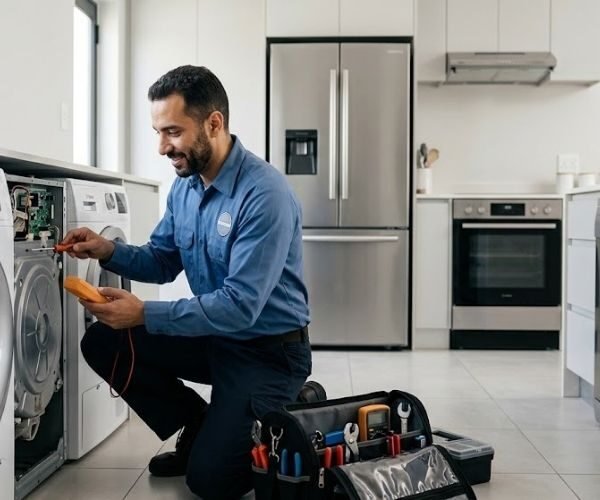
Our skilled technicians can inspect suitable appliance faults and identify the component affecting normal operation. The technician can assess the appliance based on its symptoms, condition, brand, model, and reported problem.
The service can cover suitable repairs for refrigerators, washing machines, dishwashers, dryers, microwaves, coffee machines, and electric stoves, depending on the fault and required repair.
A proper diagnosis can help determine if the appliance needs a component repair, replacement part, adjustment, or further technical attention.
Conclusion:
An appliance can stop working because of power faults, damaged controls, motor problems, faulty sensors, heating or cooling failures, drainage issues, or worn internal components. The visible symptom may not always reveal the actual cause. Dubai Fixes can inspect the appliance, identify the source of the problem, and recommend a suitable repair. If you notice unusual sounds, leaks, burning smells, or repeated failures, arrange an inspection before the issue becomes more serious.
Appliance Trouble? Get Professional Repair
A faulty appliance can disrupt your daily routine. Get the problem diagnosed and the right component repaired before a small fault becomes a bigger issue.