
Can Low AC Gas Cause Poor Cooling and Higher Electricity Bills?
Yes, low AC gas, more accurately called low refrigerant, can cause poor cooling and may increase electricity use. When the refrigerant charge drops, your AC can struggle to remove heat efficiently, making the system run longer to reach the selected temperature.
If your AC needs repeated refilling, you should look for the reason behind the refrigerant loss instead of treating refilling as routine maintenance. An AC gas refilling service Dubai can help check the system, identify possible leaks, and restore the correct refrigerant charge.
How Does Low AC Gas Affect Cooling?
Your AC uses refrigerant to absorb heat from indoor air and release that heat outside. When the refrigerant level becomes too low, the system may lose cooling performance and take longer to reach the desired temperature.
Cooling Takes Longer
Low refrigerant can reduce the system’s ability to absorb heat from the indoor air. As a result, your AC may take much longer to cool the room, especially during Dubai’s hotter periods.
Air Feels Less Cold
You may notice that the air coming through the vents does not feel as cold as before. This can happen when the refrigerant level drops and the cooling cycle cannot operate normally.
The AC Runs Longer
When the system cannot provide enough cooling, it may continue operating for longer periods while trying to reach the thermostat setting. Longer runtime can contribute to increased electricity consumption.
Some Areas Stay Warm
Low refrigerant can reduce overall performance, leaving certain areas warmer than expected. However, blocked airflow, dirty filters, ductwork, and poor insulation can create similar temperature differences.
Can Low Refrigerant Increase Your Electricity Bill?
Low refrigerant can contribute to higher electricity consumption because the AC may need to operate for longer periods to reach the selected temperature. However, other problems can also increase energy use.
Longer Operating Cycles
An AC with insufficient refrigerant may struggle to reach the thermostat setting and continue running. Longer AC operating cycles mean the system consumes electricity for more time during each cooling period.
Energy Bills Can Rise
Longer runtimes and reduced cooling performance can contribute to higher electricity use. However, you should also check filters, coils, thermostat settings, insulation, and other factors before blaming refrigerant alone.
Cooling Efficiency Drops
When refrigerant levels fall below the required charge, the AC may not transfer heat as effectively. Reduced AC cooling efficiency can make the system run longer while delivering weaker cooling.
Compressor Works Under Poor Conditions
The compressor plays a central role in the refrigeration cycle. A low refrigerant charge can affect its operating conditions and may cause the system to work harder or behave abnormally.
Better AC Cooling? Book Professional Service
Improve AC cooling with professional inspection, cleaning, and repair for airflow, refrigerant, and system performance issues.
What Causes AC Gas to Become Low?
Refrigerant does not normally disappear during regular AC operation. If the charge repeatedly becomes low, the system may have a leak or another issue that prevents it from maintaining the correct refrigerant level.
01
Refrigerant Leak in Copper Pipes
A small leak in the AC copper pipes can gradually release refrigerant while the system operates. The cooling may decline slowly, making the problem difficult to notice until performance becomes noticeably weaker.
02
Loose Pipe Connections
Loose or damaged flare connections can create small leak points around refrigerant pipe joints. Poor installation, vibration, or previous repair work can contribute to connection problems that cause gradual refrigerant loss.
03
Leaking Evaporator Coil
The evaporator coil can develop corrosion, cracks, or small openings that allow refrigerant to escape. Coil leaks can become difficult to locate and may require professional leak detection equipment.
04
Damaged Service Valve
A damaged or poorly sealed service valve can allow refrigerant to escape from the system. Technicians should inspect these components when an AC repeatedly loses refrigerant after previous refilling.
What Happens If You Keep Running an AC With Low Gas?
Continuing to operate an AC with low refrigerant can keep the underlying problem active. The system may continue delivering poor cooling while consuming electricity and potentially placing additional stress on components.
Cooling Performance Keeps Declining
If refrigerant continues escaping, the system may gradually lose its ability to cool the room. You may notice longer cooling times and increasingly weak temperature control.
Electricity Consumption May Increase
The AC may run longer because it struggles to reach the thermostat setting. This extended operation can increase electricity consumption, particularly when the system operates for long periods each day.
Coil Freezing May Occur
A low refrigerant charge can contribute to unusually low evaporator coil temperatures, which may cause ice formation. Restricted airflow can produce similar freezing, so technicians should check both possibilities.
Compressor Problems Can Develop
Low refrigerant can affect compressor operating conditions. Continuing to run a system with an unresolved refrigerant problem may increase component stress and potentially lead to more expensive repairs.
How Dubai Fixes Can Help With Low AC Gas
Our expert team can inspect your AC when low refrigerant causes poor cooling or repeated performance problems. The technician can assess the system, check relevant components, and investigate possible refrigerant leaks before recommending further service.
If the system has lost refrigerant, the technician can identify the required refrigerant type and assess the charge according to the AC specifications. If a leak exists, repairing the affected area remains an important part of solving the problem.
We can also check other causes of weak cooling, including dirty filters, restricted airflow, coil problems, and mechanical or electrical faults. This helps prevent unnecessary refrigerant refilling when another issue causes the poor cooling.
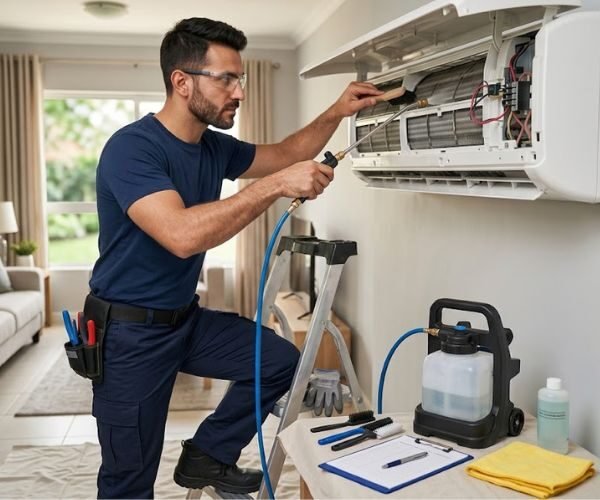
Is Refilling AC Gas Enough to Fix the Problem?
Refilling refrigerant can restore cooling when the system has lost charge, but it does not fix the reason the refrigerant became low. Repeated refilling without diagnosis can leave the main problem unresolved.
Refilling Restores the Charge
When a technician confirms that the system needs refrigerant, adding the correct type and amount can restore the required charge and improve cooling performance.
A Leak Still Needs Repair
If the refrigerant escaped through a leak, adding more refrigerant without repairing that leak only provides a temporary solution. The system may lose the new charge again.
The Correct Refrigerant Matters
Different AC systems use different refrigerants, such as R32 or R410A. A technician should confirm the manufacturer’s specified refrigerant before servicing the system.
The System Needs Testing
After refrigerant service, the technician should check system operation and cooling performance. Testing helps identify remaining problems and confirms that the AC operates under suitable conditions.
Wrapping Up:
Low refrigerant can contribute to poor cooling, longer operating cycles, and higher electricity use, but these symptoms do not always confirm a refrigerant problem. Dirty filters, blocked airflow, faulty components, and other AC issues can create similar signs.
If your AC repeatedly loses cooling or needs refrigerant refilling, Dubai Fixes can inspect the system and help identify the underlying cause. Fixing a confirmed leak and restoring the correct refrigerant charge can help your AC return to normal cooling performance.
Want Better AC Cooling? Get It Serviced
Get your AC checked and serviced to address cooling problems and help your system deliver better airflow and temperature control.