
Why Does AC Gas Keep Running Low? 7 Possible Causes
If your AC gas keeps running low, the system usually has an underlying problem rather than simply needing repeated refilling. Refrigerant does not normally disappear during regular operation. Leaks, damaged connections, poor installation, or component faults can cause the refrigerant level to drop and reduce cooling performance.
Repeated refilling may temporarily restore cooling, but it will not solve the reason the refrigerant keeps escaping. An AC gas refilling service in Dubai can help check the system, identify possible refrigerant loss, and determine if repair or further testing is needed before adding refrigerant again.
Why Does AC Gas Keep Running Low?
Your AC uses refrigerant in a closed cooling system. When the refrigerant level drops repeatedly, something usually allows it to escape or prevents the system from holding the correct charge. These seven causes can help explain the problem.
01
Refrigerant Leak in the Copper Pipes
A leak in the copper refrigerant lines can slowly release refrigerant while the AC operates. Small leaks may remain unnoticed initially, but cooling performance can gradually decline as the refrigerant charge becomes lower.
02
Loose Flare Connections
Poorly tightened or damaged flare connections can allow refrigerant to escape at connection points. This problem can develop after installation, maintenance, vibration, or repeated work on the refrigerant lines.
03
Damaged Refrigerant Coil
The indoor evaporator coil or outdoor condenser coil can develop corrosion, cracks, or small holes that allow refrigerant to escape. A coil leak often requires professional inspection to locate accurately.
04
Corrosion Around AC Components
Corrosion can weaken metal surfaces and create tiny openings in refrigerant-carrying components. A slow leak may continue for weeks or months, causing the AC gas level to gradually fall.
05
Poor Previous Installation
Incorrect pipe connections, damaged tubing, unsuitable fittings, or poor installation practices can create leak points. A refrigerant problem that begins soon after installation deserves a detailed inspection rather than repeated gas refilling.
06
Damaged Service Valves
Service valves provide access to the refrigerant circuit during installation and servicing. A faulty valve, damaged seal, or loose connection can allow refrigerant to escape slowly.
07
Physical Damage to Refrigerant Lines
Copper pipes can become damaged, bent, or weakened due to accidental impact, movement, or unsuitable installation. Even a small opening can cause gradual refrigerant loss and reduced cooling.
What Happens When Your AC Gas Gets Low?
Low refrigerant affects more than the temperature coming through your vents. As the refrigerant charge drops, the AC may struggle to transfer heat properly and can develop other performance symptoms that require attention.
Cooling Becomes Weak
Low refrigerant can reduce the AC’s ability to absorb and transfer heat effectively. You may notice that the room takes longer to cool or that the air coming through the vents feels less cold.
The AC Runs for Longer
When the system cannot provide enough cooling, it may continue running for extended periods while trying to reach the thermostat setting. Longer operating cycles can increase energy consumption and system workload.
Ice Can Form on the Coil
A low refrigerant charge can cause the evaporator coil to become unusually cold, which may lead to ice formation under certain conditions. Restricted airflow can create similar symptoms and also requires checking.
Electricity Use May Increase
An AC struggling with low refrigerant may operate for longer periods to achieve the selected temperature. Longer runtime can increase electricity consumption, although other faults can also cause higher energy use.
The Compressor Can Face Extra Strain
The compressor relies on proper refrigerant conditions during normal operation. A refrigerant-related problem can affect system operation and place additional stress on the compressor if you continue running the AC without addressing the cause.
AC Gas Low or Empty? Book Refilling Service
Low refrigerant can affect cooling performance and increase AC strain. Get your system checked and refill the gas when needed.
How Is a Refrigerant Leak Found?
Finding a small refrigerant leak can require more than a visual inspection. A technician may inspect connections, pipes, coils, and service components while using appropriate diagnostic methods to locate the suspected leak.
Visual Inspection
A technician can inspect refrigerant lines, fittings, valves, coils, and accessible components for visible damage, corrosion, or signs associated with a leak. This provides an initial indication of where further testing should focus.
Pressure Testing
Pressure testing can help determine if the sealed refrigerant circuit holds pressure properly. A technician uses suitable equipment and procedures to assess the system without guessing where the refrigerant may be escaping.
Electronic Leak Detection
Electronic leak detectors can help identify refrigerant escaping through small openings that may not be visible during a basic inspection. This method can help technicians narrow down difficult leak locations.
Leak Detection Solution
A technician may use an appropriate leak detection solution around suspected joints and connections. Escaping refrigerant can create visible bubbling at the leak point, helping confirm a suspected connection problem.
Why Does Refilling Gas Without Repair Cause Problems?
Adding refrigerant can restore the cooling performance temporarily when the system has lost charge. However, repeated refilling without identifying the cause can leave the actual problem unresolved and increase service costs over time.
01. The Leak Continues
If a leak remains inside the refrigerant circuit, newly added refrigerant can escape again. The AC may cool properly for a while before the same symptoms return.
02. Cooling Problems Return
Repeated refrigerant loss means the system can eventually lose enough charge to affect cooling again. You may notice longer operating cycles, weaker airflow temperature, or difficulty reaching the selected setting.
03. The Root Cause Remains Hidden
Refilling only addresses the refrigerant level. It does not repair damaged pipes, loose connections, leaking coils, faulty valves, or other components responsible for refrigerant loss.
What Should You Do When AC Gas Keeps Dropping?
Repeated refrigerant loss deserves proper diagnosis before you schedule another refill. You can observe the symptoms and check basic maintenance points, but refrigerant-system work requires appropriate tools and technical knowledge.
01
Stop Repeated Top-Ups
Do not treat refrigerant refilling as a routine maintenance task when the level repeatedly drops. Ask a technician to investigate why the system loses refrigerant before adding another charge.
02
Check the Air Filter
A dirty filter can reduce airflow and contribute to coil freezing, which can look similar to a refrigerant problem. Check the filter and clean or replace it according to the manufacturer’s instructions.
03
Arrange Leak Detection
If your AC repeatedly loses cooling after a refill, arrange professional leak detection. A technician can inspect the refrigerant circuit and identify areas that may require repair before recharging.
04
Repair the Leak Before Recharging
When a technician confirms a leak, the affected component or connection should receive the appropriate repair before the system receives its correct refrigerant charge.
How Can Dubai Fixes Help With Repeated AC Gas Loss?
Our skilled technicians can inspect an AC that repeatedly loses refrigerant and help identify the reason behind the cooling problem. The technician can assess the refrigerant circuit, connections, coils, service valves, and other relevant components.
If the inspection identifies a leak, the appropriate repair can address the affected component before refrigerant is added again. This approach helps you deal with the cause instead of repeatedly treating the same symptom.
Our team can also check other possible causes when low refrigerant is not the actual problem. Dirty filters, restricted airflow, frozen coils, electrical faults, and mechanical issues can all affect AC cooling performance.
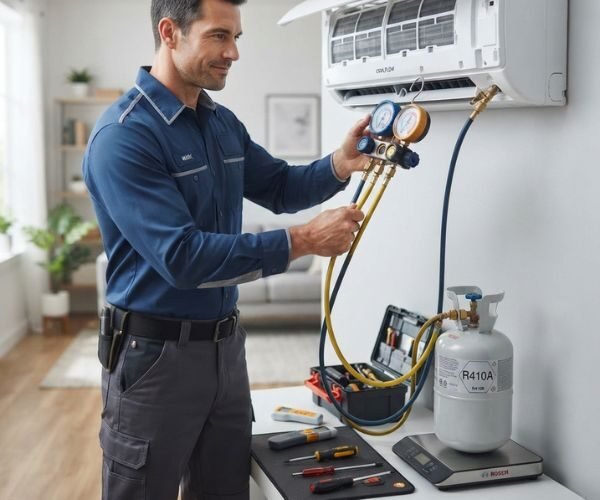
Keep Refrigerant Problems From Coming Back
Proper installation and regular maintenance can help you spot developing refrigerant problems earlier. You should also pay attention to changes in cooling performance instead of waiting until the AC stops cooling completely.
Wrapping Up:
AC refrigerant should not keep running low under normal conditions because the system operates through a closed circuit. Leaks can develop in copper pipes, flare connections, coils, valves, or other components, while poor installation and physical damage can also contribute to refrigerant loss.
If your AC needs frequent refilling, do not keep treating the low gas level as the main problem. Dubai Fixes can inspect the system, identify possible refrigerant loss, and recommend the appropriate repair before recharging the AC. Proper diagnosis can help restore cooling and reduce repeated refrigerant-related service visits.
Need AC Gas Refilling? Get Professional Service
If your AC is not cooling properly, a refrigerant issue may be the cause. Get the gas level checked and the system serviced by a technician.