
What Should You Check Before Installing a New AC?
Buying a new AC is only the first step. You also need to check the room size, cooling capacity, electrical supply, installation location, airflow, drainage, and indoor and outdoor unit placement. If you overlook these details, your new system may struggle to cool properly or develop avoidable installation problems.
A proper assessment before installation helps you choose the right system and prepare the space correctly. With an AC installation service in Dubai, a professional can check the site, confirm the required capacity, review electrical and drainage needs, and install the unit according to the manufacturer’s requirements.
Start With the Right AC Size
The size of your AC should match the room or area you want to cool. A unit that lacks sufficient capacity may run for long periods without reaching the desired temperature, while an oversized unit can cycle too frequently and may not control indoor moisture properly.
Measure the Room Area
Measure the room’s length, width, and ceiling height to estimate its cooling requirements. Room size provides a useful starting point, but a professional assessment can consider other important factors.
Consider Windows and Sun Exposure
Large windows and direct sunlight can increase indoor heat and affect AC capacity requirements. Tell your installer about significant sun exposure so they can recommend a suitable cooling capacity.
Think About How You Use the Room
Bedrooms, kitchens, offices, and living rooms can have different cooling needs based on occupancy, appliances, and daily use. Consider how you use the space before selecting your AC.
Check the AC Capacity
AC capacity is commonly listed in tons or BTUs and should match the area’s cooling requirements. Avoid choosing the largest unit automatically and ask a professional installer for guidance.
Check Your Electrical Supply Before Installation
A new AC can place a significant electrical load on your property’s system. Checking the electrical supply before installation helps you identify wiring, circuit, breaker, and power-related requirements before the technician starts work.
01
Confirm the Required Voltage and Power
Check the manufacturer’s specifications for the AC model you plan to install. The electrical requirements can vary between units. Your installer can confirm that the available power supply matches the selected AC. Do not connect a new unit to an unsuitable power source simply because a previous AC used the same location.
02
Inspect the Wiring
Old, damaged, or undersized wiring can create problems when you install a new AC. An installer should inspect the relevant wiring and determine if it can safely support the new system. If the wiring needs attention, address the issue before connecting the AC.
03
Check the Circuit Breaker
The AC may require a dedicated circuit depending on its specifications and your property’s electrical setup. The installer should check the breaker and circuit arrangement before installation. Do not increase the breaker rating yourself to accommodate a larger load. An electrician or qualified technician should assess the complete electrical system.
04
Plan for Proper Earthing
Proper earthing forms an important part of electrical safety. The installer should check the existing earthing arrangement and confirm that it suits the installation requirements. If the system needs electrical corrections, complete them before operating the new AC.
Installing a New AC? Get the Right Setup
A proper installation helps your new AC cool efficiently and operate smoothly. Get professional help with unit selection, placement, connections, and installation.
How Can You Prepare Your Home for AC Installation?
Good preparation makes installation easier and gives your technician enough room to work safely. Clear the installation area, identify the electrical supply, and decide where you want the indoor and outdoor units placed. You should also discuss drainage and access before work begins.
Prepare the Outdoor Unit Area
Clear unnecessary objects from the outdoor installation area. The unit needs suitable support and enough space around it for airflow and servicing. Make sure technicians can safely access the location for installation and future maintenance.
Confirm the Wall Condition
Check that the wall can support the indoor unit and its mounting hardware. Some walls may need additional support or a different installation approach. Do not assume that every wall can hold every AC unit without assessment.
Discuss Installation Requirements Before Work Begins
Tell the installer about any building restrictions, preferred pipe routes, drainage concerns, or access limitations before installation starts. A clear discussion at the beginning can prevent unnecessary changes once the work is underway.
Clear the Installation Area
Remove furniture, decorations, curtains, and other objects that could interfere with installation. Give the technician enough working space around the proposed indoor unit location. Clear access also helps reduce the chance of accidentally damaging nearby items during installation.
How Dubai Fixes Can Help With Your New AC
Our skilled technicians can help you prepare for a new AC installation by assessing the installation requirements and identifying the practical work needed for your space. The service can cover the installation of AC equipment while taking factors such as unit placement, connections, drainage, and system operation into account.
Before installation, you can discuss the room, preferred unit location, access, and other requirements with the technician. This gives you a clearer idea of what the installation involves and helps identify potential issues before the work begins.
After installation, the system should receive an operational check so you can confirm that the AC runs properly. If the technician identifies a problem with the installation or equipment, you can address it before relying on the new system for daily cooling.
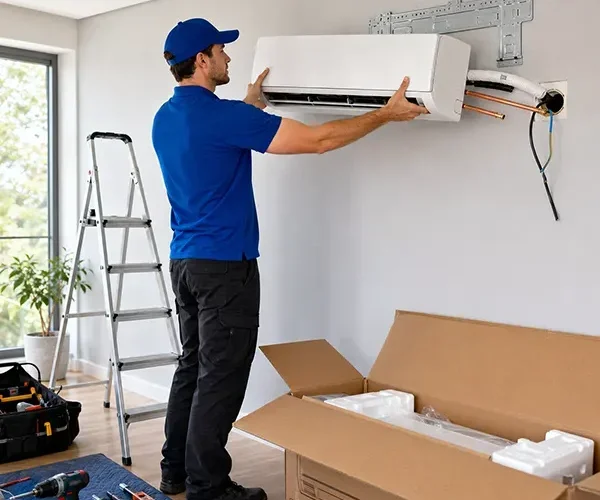
Why Professional AC Installation Makes a Difference
A new AC needs more than a simple wall mounting and electrical connection. Incorrect positioning, poor drainage, unsuitable wiring, or improper refrigerant-line work can affect performance and create problems later. Professional installation gives you a proper assessment before the system starts operating.
Proper Site Assessment
A technician can inspect the room, installation surfaces, electrical supply, drainage route, and available space before recommending the installation approach. This helps identify potential problems before they affect the new system.
Correct Indoor and Outdoor Unit Placement
Professional installers understand the clearance and airflow requirements of the equipment. They can position the units with future servicing in mind. Proper placement also helps the system distribute air effectively and operate within its intended conditions.
Careful Pipe and Drain Connections
The refrigerant lines and condensate drain need appropriate routing and connections. Poor installation can affect cooling or create drainage problems. A qualified installer can check these connections during installation and test the system afterward.
Testing Before Handover
The technician should run the AC after installation and check its operation. This can include checking airflow, cooling response, drainage, and other relevant operating conditions. Testing allows you to address installation-related concerns before regular use.
Final Thought:
Before installing a new AC, check the cooling capacity, room size, electrical supply, installation locations, airflow, drainage, ductwork, and maintenance access. These details can affect how well your new system performs and how easily you can service it later.
A professional AC installation service can assess these requirements before connecting your new unit. If you are planning an installation, speak with Dubai Fixes about your space and installation needs so the technician can recommend the appropriate approach and check the system after installation.
New AC Installation? Let the Experts Handle It
Incorrect sizing, poor placement, or faulty connections can affect cooling and energy use. Get your new AC installed correctly from the start.