
Why Does a Circuit Breaker Keep Tripping? 8 Common Causes
Why Does a Circuit Breaker Keep Tripping? 8 Common Causes
A circuit breaker that keeps tripping usually signals an electrical problem that needs attention. Overloaded circuits, faulty appliances, damaged wiring, short circuits, and other faults can cause the breaker to shut off power as a safety response.
Repeatedly resetting the breaker may restore electricity for a short time, but it does not fix the underlying issue. A professional electrician service in Dubai can inspect the circuit, identify the cause, and recommend the right electrical repair.
Why Does a Circuit Breaker Keep Tripping?
A breaker trips when it detects an electrical condition that could become unsafe. The cause may involve the circuit itself, an appliance, wiring, or the amount of electrical load connected to that circuit.
01
The Circuit Is Overloaded
An overloaded circuit carries more electrical demand than it can safely handle. Running several high-power appliances through the same circuit can increase current flow and cause the breaker to trip repeatedly.
02
A Short Circuit Is Present
A short circuit occurs when electricity finds an unintended low-resistance path. This can create a sudden increase in current, causing the breaker to trip quickly and protect the circuit.
03
An Appliance Has a Fault
A faulty appliance can draw excessive current or develop an internal electrical fault. If the breaker trips whenever you use one particular appliance, that appliance may need professional inspection.
04
Wiring Has Become Damaged
Damaged, loose, or deteriorated wiring can create unsafe electrical conditions and cause repeated breaker trips. Heat, age, physical damage, or poor previous electrical work can contribute to wiring problems.
05
Ground Faults Are Occurring
A ground fault happens when electrical current takes an unintended path toward ground. These faults can cause protective devices to trip, especially around areas where electricity may come into contact with moisture.
06
The Breaker Itself Is Faulty
Circuit breakers can wear out or develop internal faults over time. A weak or damaged breaker may trip unexpectedly, but you should have the circuit checked before assuming the breaker itself needs replacement.
07
Too Many High-Power Appliances Run Together
High-power appliances such as ovens, water heaters, washing machines, and air conditioners can place substantial demand on electrical circuits. Running several together may exceed the circuit’s intended capacity.
08
Moisture Has Reached an Electrical Point
Water or moisture near sockets, wiring, electrical panels, or appliances can create dangerous electrical conditions. A breaker may trip to interrupt the affected circuit and reduce the risk of electrical injury or damage.
What Does a Tripping Breaker Tell You?
A tripping breaker acts as a warning rather than simply an inconvenience. It interrupts the electrical supply when the circuit experiences a condition that exceeds its safe operating limits or indicates a fault.
Frequent Trips Need Attention
If the same breaker trips repeatedly, the circuit may have an unresolved overload, wiring problem, appliance fault, or breaker issue. Repeated trips deserve proper inspection instead of constant resetting.
One Appliance Causes the Trip
If the breaker trips whenever you switch on a specific appliance, that appliance or its connection may have an electrical fault. Stop using it and arrange an appropriate inspection.
The Breaker Trips Immediately
A breaker that trips immediately after you reset it may indicate a short circuit, ground fault, or serious electrical problem. Do not repeatedly reset it when the problem continues.
Trips Happen During Heavy Use
If the breaker trips when several high-power appliances operate simultaneously, the circuit may be overloaded. Reducing the electrical load may stop the symptom, but the circuit still needs assessment.
Circuit Breaker Keeps Tripping?
Repeated breaker trips can point to overloaded circuits, faulty wiring, damaged appliances, or breaker problems. Get the electrical fault checked by a qualified electrician.
Can an Overloaded Circuit Cause Repeated Trips?
Yes, excessive electrical demand can cause a breaker to trip. The breaker monitors current flow and interrupts the circuit when the load reaches a level that could overheat the wiring.
Too Many Devices Share One Circuit
Connecting many appliances and devices to one circuit increases the total electrical demand. High-load appliances can push the circuit beyond its intended capacity and trigger the breaker.
High-Power Appliances Increase Load
Air conditioners, electric ovens, water heaters, and other high-power equipment can draw significant current. Operating several of them together can place substantial demand on the same electrical circuit.
Extension Leads Can Add Demand
Extension leads and power strips allow you to connect additional devices, but they do not increase the circuit’s capacity. Connecting several high-power appliances through them can create an overload.
The Circuit Needs Better Load Distribution
If one circuit regularly carries too many high-demand appliances, an electrician may recommend redistributing loads across suitable circuits. The correct solution depends on the property’s wiring and electrical capacity.
What Electrical Problems Can a Professional Check?
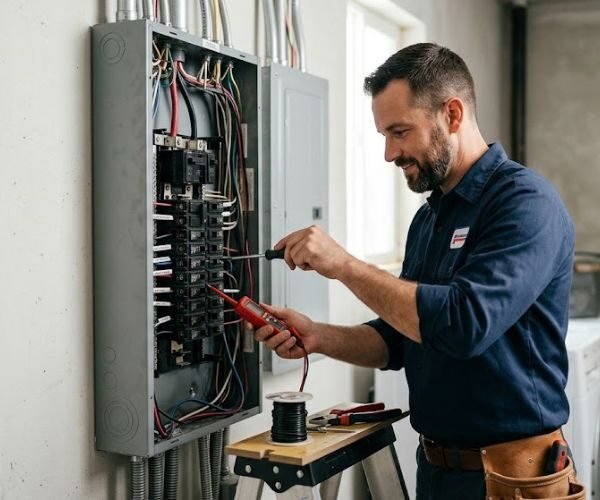
A professional electrical inspection can examine the circuit, connected equipment, protective devices, wiring, and other relevant components. Testing helps identify problems that may not be visible during a basic visual check.
Circuit Load Assessment
The electrician can assess the electrical demand placed on the circuit and determine if connected appliances exceed its intended capacity. This helps identify overload-related breaker trips.
Wiring Inspection
The electrician can inspect accessible wiring for loose connections, damage, overheating, deterioration, and other concerns. Faulty wiring can create repeated trips and other electrical safety problems.
Breaker Testing
The electrician can assess the circuit breaker and determine if it operates correctly. A faulty breaker may need replacement, but the circuit should also receive inspection to rule out another cause.
Socket and Switch Inspection
Loose terminals, damaged sockets, worn switches, and other connection problems can affect circuit safety. Professional inspection can identify these issues and determine the appropriate repair.
How Dubai Fixes Can Help With a Tripping Breaker
Our experts can inspect your electrical system when a circuit breaker keeps tripping. The electrician can assess the affected circuit, check connected appliances, inspect accessible wiring, and identify possible electrical faults.
If the problem involves an overloaded circuit, damaged wiring, faulty equipment, or a worn breaker, the technician can explain the issue and recommend the appropriate repair. This approach addresses the cause rather than simply resetting the breaker.
We can also help you understand recurring electrical problems in your property. If the circuit regularly struggles with your household load, the electrician can assess the situation and discuss suitable electrical solutions.
Circuit Breaker Safety Checklist
Use these basic checks when a breaker trips, but do not attempt electrical repairs yourself. Repeated trips or visible warning signs require professional assessment.
Can an Old Electrical System Cause Breaker Trips?
Older electrical systems can develop problems as wiring, connections, sockets, breakers, and other components age. However, age alone does not prove that an electrical system needs replacement.
01
Aging Wiring Can Deteriorate
Old wiring may develop damaged insulation, loose connections, or other deterioration. These conditions can affect circuit operation and may contribute to breaker trips when the wiring cannot handle current safely.
02
Old Breakers Can Wear Out
Circuit breakers can become worn or faulty after years of operation. A professional can test the breaker and determine if replacement is necessary after checking the circuit.
03
Electrical Demand May Have Increased
Older properties may have electrical systems designed for lower household demand. Adding air conditioners, heaters, kitchen appliances, and other equipment can place greater loads on existing circuits.
04
Connections May Become Loose
Electrical connections can loosen over time because of vibration, heat cycles, or previous installation issues. Loose connections can create resistance and heat, potentially causing electrical problems.
Wrapping Up:
A circuit breaker that keeps tripping can point to an overloaded circuit, faulty appliance, damaged wiring, short circuit, ground fault, moisture, or a worn breaker. Treat repeated trips as a warning instead of a problem you should repeatedly reset.
Dubai Fixes can inspect the affected circuit, identify the likely cause, and recommend the right electrical repair. If you notice burning smells, sparks, smoke, damaged outlets, or a breaker that trips immediately, stop using the affected circuit and seek professional help.
Breaker Keeps Tripping? Get Electrical Help
Don’t keep resetting a tripping breaker without finding the cause. A professional electrical inspection can identify the fault and recommend the right repair.